
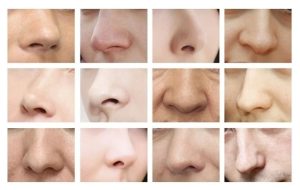
A condominium of boogers
During my 30s and 40s living in Miami, I babysat for my niece and nephew when they were pre-school age. They glided between Spanish and English, but some words were relegated only to Spanish. One of those for my nephew Lucas was moco, booger. He often jammed his finger up his four-year-old nose, excavating. When he found the motherlode, he’d pull out his tiny finger holding the telltale green blob. He’d wave it gleefully, proclaiming moco loco, crazy booger. Then he usually put it into his mouth.
After 15 months away from Flag, I returned in early July and find myself thinking of Lucas and the days of los mocos locos. Not the eating boogers part of that little story, but the having boogers part. Back in beloved Flag once more, it’s not the lethargy that altitude sometimes brings that I am adjusting to, it is the inside of my nose and the complex rearrangement of mucus that living here requires. Goodbye to the sea-level gentle coating of mucus and the delicate, pale green blobs that used to quietly nestle there. Hello once again to encrusted, unwieldy boogers the size of smoked oysters. I have (and I am not the only one among us) boogers so large they could be classified as nation-states.
Here is where it might be prudent to insert that I consider myself someone with the social intelligence needed to recognize that boogers are relegated to the list of Things That Will Always Be Gross To Talk About. Along with farts, snot and poop, boogers are not on most conversational menus. But I think the time has come to de-shame the booger. And I really want to whine about the First-World-problem mundane horror of it all. Whether we call them goobies, greenies, boogs or nose fruit (or one of the other slang terms listed on Urban Thesaurus for booger), we all have them. And in Flagstaff we have them big.
The basic booger is made primarily of mucus, which is made of water, salt and some white blood cells. Toss in a pinch of pollen and dust, and this mix coalesces into the blobs that boost our immune systems, keep our nose interiors moist for maximum functioning, and prevent airborne germs from making their way into our lungs. Now add in the Flag factors of low humidity and decreased oxygen. Our mucus production often adapts to these conditions by thickening. From there, it’s a downhill cascade: the inside of the nose dries out, boogers enlarge, they grow stubborn, and lives are forever changed. Hence, my vexation—and this hopelessly cringe essay.
Many smart people believe the word booger has its origins in early English words like buggard and boogart. Those terms morphed into words like bogeyman, a creepy, menacing character who is fixated on scaring children.
Other smart people say that booger iss a variation of bugger, which is from the Anglo-Norman word bougre. If you follow the line deeper into origin story territory, bougre is from the Latin word Bulgarus, and references an 11thcentury Bulgarian religious sect called the Bogomils, labeled as heretics by the church. From buggard and boogart and bogeyman and bugger comes booger. This is a not a sunny family tree.
Although some might call these adjacent activities, having boogers—no matter the size–is distinctly different from picking your boogers, which is also an entirely separate activity from eating your boogers. Having boogers is not a gateway drug leading you down the dark path to consumption. On the Universal Standardized Ladder of Grossness, eating boogers ranks much higher than picking boogers. And having boogers, well, this is just the way things go for us all.
A clearly suspect 1995 study published in the Journal of Clinical Psychiatry was deemed “the first population survey of nose picking.” While the study recognized nose picking as “socially compromising”, it found that 91 percent of respondents to a questionnaire were current nose pickers ,although only 75 percent felt “almost everyone does it.” Everyone does do it and if they say they don’t, methinks they doth protest too much.
No study that my flimsy research yielded has parsed the correlation between nose pickers and booger eaters. The fancy word for eating your boogers is mucophagy. If eating boogers is too lowbrow a definition, then think of mucophagy as “the act of extracting dried nasal mucus with one’s finger and the succeeding action of ingesting the mucus from the nose picking.”
British TV presenter, comedian and food writer Stefan Gates discusses eating boogers in his 2006 book Gastronaut: Adventures in Food for the Romantic, the Foolhardy, and the Brave. Gates says that 44 percent of people he questioned said they had eaten their own dried nasal mucus in adulthood and reported that they liked it. Gates writes in his book that “our body has been built to consume snot.” His thesis is that that we are continually swallowing snot (and boogers) through the back end of our noses, so what could be the harm in extracting it from the front side and taking a nibble? It may be unsavory or socially verboten, but it is not dangerous for our health, unless you factor in grossness, which is entirely dangerous to your ability to not scare people away when you are with them and dig in.
I’m pleased to report that I’ve been back in Flag for about a month, and the booger situation has stabilized. They are still in there, but we’ve made peace. It may sound odd, but I miss ranting about them, wrestling with them, chasing them down the sink drain. Maybe this whole booger fixation was about something bigger. As the world I know goes loco, I turned my attention to the moco. And for a few weeks, everything felt normal again.