 My thoughts kept returning to the letters I’d mailed…to say that my mom was hurt would be an understatement; in fact, she was heartbroken.
Crisp autumn sunshine flooded the streets of upper Manhattan that afternoon. City buses and yellow cabs lurched from light to light, horns honked, pedestrians milled along the sidewalks.
I stood in front of a big blue U.S. Mail drop-box on the corner of 63rd and Broadway clutching two envelopes, feeling mildly sick, almost dizzy. One was addressed to my father, the other to my mom.
It was October of 1990, and I was 34 years old. For the previous ten months I’d been meeting each week with a therapist and a small group of “adult children,” as we referred to ourselves then, to talk about our various addictions and neuroses, our family histories, and how these things might be linked.
The therapist guiding these discussions had urged us to recall the good, the bad and the ugly of our growing-up years, and to consider how childhood experiences and family dynamics might be affecting our adult lives. To pave brighter paths into the future, we were encouraged to explore the difficult parts of our past and “break the silence.”
This therapy had resulted in the two letters I held in my sweating right hand. After a long moment I pulled the painted metal handle, swallowed hard and dropped them into the slot.
At the time, I saw the letters as honest attempts to improve the relationships I had with my parents. But each was essentially a list of ways I thought they had failed me.
The content of those letters is nobody’s business now but my own. My father died 11 years ago and my mother’s been gone for three. Today I can’t even recall all that was in them.
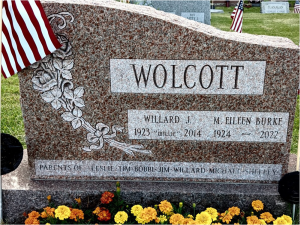
But that moment at the mailbox came to mind sharply last month, during a visit to the elementary school in upstate New York that I attended sixty years ago. The occasion was a ceremony to honor my late mother—the dedication of a sculpture created by my nephew, and given to the school by her grandkids.
All six of her surviving children were in the school gymnasium, plus a few in-laws and a small army of grandkids and great-grandkids. Twenty-five of us shared a noisy, boisterous lunch afterward, spending hours catching up on each others’ lives and telling family stories. We laughed a lot, and shed a tear or two. We spoke of my late sister, Leslie, and imagined how pleased she and my mother would have been to see us all together.
While the day unfolded, my thoughts kept returning to the letters I’d mailed so long ago. At the time, my parents were baffled by what I had written. To say that my mom was hurt would be an understatement; in fact, she was heartbroken.
Soon after those discussions, I moved West and got busy with my life here, seldom returning to the East for family gatherings. A distance grew between my mother and I. More than 15 years would pass before we talked about those letters again.
When that time came, I told her that I regretted sending them, and realized there were other, better ways that I could have dealt with what were not my parents’ problems, but my own. I apologized for the pain I’d caused.
“It did hurt,” she said simply. “But I knew you never stopped loving me.”
It’s an unfortunate truth that kids sometimes thoughtlessly and needlessly hurt their parents. We judge them harshly. We fail to consider the difficulties they faced while growing up, or the sacrifices they made to raise us.
Having never fathered a child, or attempted to raise one, my opinions on parenting don’t carry much weight. But to me it looks like the hardest job on the planet. It certainly can’t be done perfectly.
So today when I consider my childhood, I marvel at all that my parents did accomplish. Both grew up in circumstances far more difficult than mine, yet managed to keep their children housed, clothed and fed until we could fend for ourselves. Our parents modeled hard work and responsibility, and saw to it that we were educated. They taught us right from wrong.
And they gave us each other.
My mother grew up an only child, and often said that her greatest ambition had been to raise a big family that sticks together.
In the restaurant dining room last week, watching three generations of our family eating and joking and telling stories together, it was hard to see her parenting career as anything but a smashing success.
And my mother’s greatest achievement—the big, caring family that had traveled from all directions to remember her—has become my steadiest anchor in this uncertain world.
Today, the complaints I might have once had no longer matter much. During her last 15 years, we two were closer than we’d ever been, and enjoyed each other more.
If we’re lucky that’s how it goes. As time passes, the aperture grows. We judge less and see more of the good. Our eyes open wider, and so, too, do our hearts.